


Weeks after Dad died, I texted him some pictures of my garden foxes. I knew something was off and then I remembered. Oh, he’s gone.
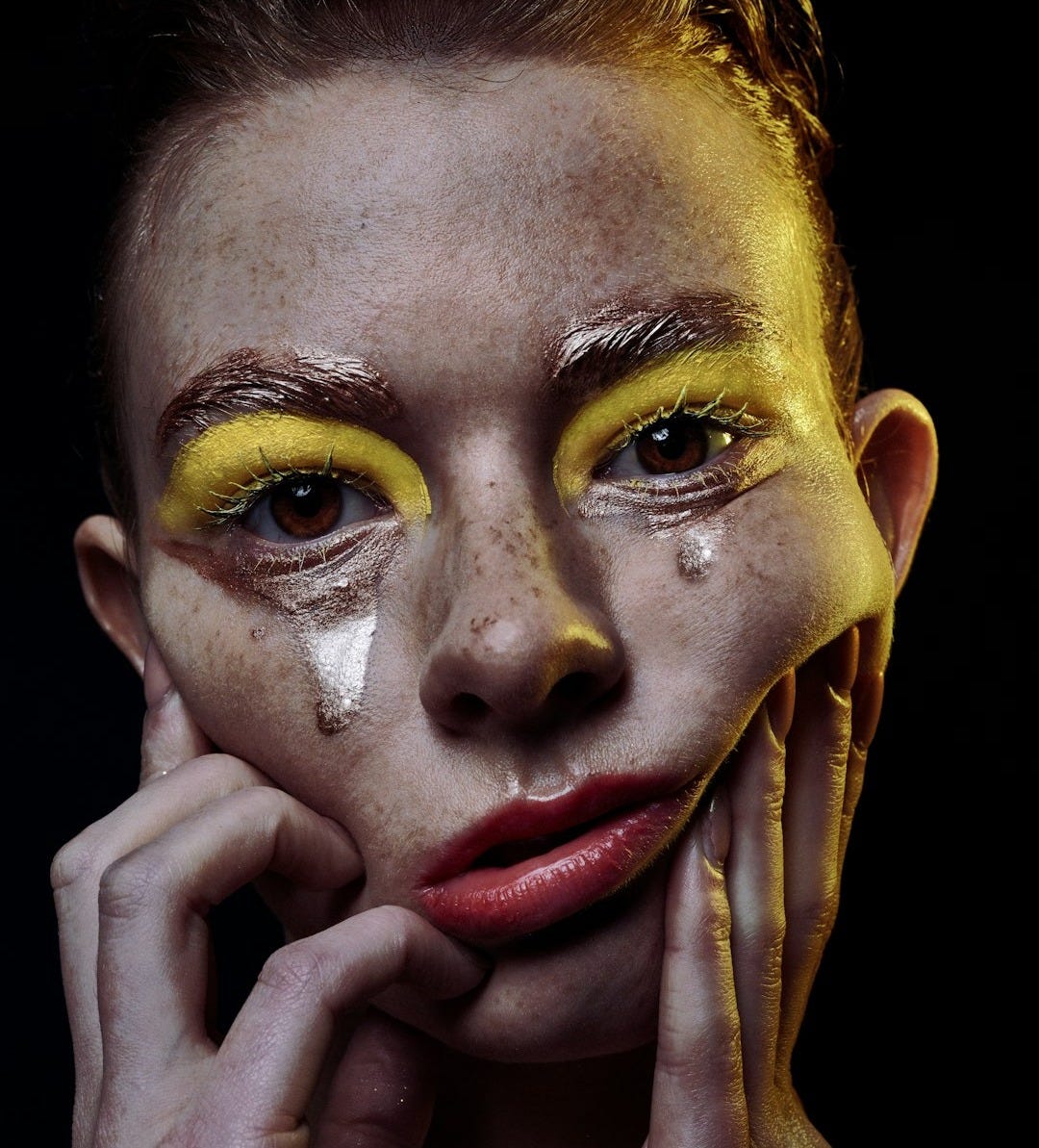
It was clear I wasn’t OK. I took a few days off work. My voice sounded different. I moved more slowly. My face was puffy from tears and stress.
People knew I was grieving.
I felt held and supported by friends and colleagues. Family was a bit different because we were all reeling. Lost in our own loss.
The messages were lovely. Flower bouquets and cards. Softer tones aware of my closeness to Dad and the depth of my devastation.
No one expected normal.
The shift didn’t happen overnight. It happened gradually.
The quiet recalibration no one notices
I felt the silent judgment when I hadn’t looked for a new job after the last one ended months before.
Gentle nudges about what Dad would want me to do other than hermit myself away from the world.
But over time, I became more functional in a patchy way.
Back to a day job, which had its own stresses. I could hold conversations without tearing up (most of the time). From the outside, it looks like improvement. From the inside, it feels like sheer effort.
And at some point, the checking-in dissipated.
I don’t think it's intentional. We respond to visible distress. When it's less visible, the response adjusts.
We think our mates are doing better. We don't want to keep repeating “how are you feeling?” We don't want to keep picking at the grief scab.
But internally, the adaptation is still happening. Inside, the pain still bounces around, seared into our being.
We question reality itself and the point of going on.
“After the funeral, it went quiet…”
In grief forums, this comes up again and again.
“Everyone was there at the start.”
“After the funeral, it went quiet.”
“They assume I’m fine now.”
Not because people stopped caring, but because the bereaved seem and look more stable and lives keep going on.
Once they're back at work, back in a routine, no longer visibly undone or falling apart, the world reads it as a form of “recovery.”
Sure, still delicate or maybe struggling at times, but they're getting back to life. What they don’t see is how deep down they’re still recalibrating. Still adjusting to who they are without that parent. Still noticing the absence in ordinary, unexpected moments.
At work, I could respond to emails. I could sit through meetings without feeling like I might unravel. But when a memory of Dad popped up because someone mentioned gardening, I craved someone to notice the magnitude of my loss.
But they rarely did.
Years on, I'll tear up in LIDL near the middle aisle of random offers Dad loved exploring, and the wave hits me fast.
Tight chest and throat. Breathing gets harder. Eyes water and sting with hot tears I struggle to hold back. Not collapsing. Just caught for a second by a trigger memory.
From the outside, it looks like hay-fever. Inside, it's like holding back a tsunami.
When “I’m fine” becomes automatic
By this stage, “I’m fine” becomes efficient. A reflexive reply when grief feels odd to bring up.
It keeps conversations smooth. No one wants to hear how you really feel right? It's an easy breezy social contract.
I mean how do you even reply to “I feel like I'm dying inside today. What about you?”
Yep, “I'm fine” avoids awkward pauses. It protects others from having to respond to something complicated or heavy.
Especially if you've always been the steady one. Reliable. “Strong”. The one who doesn't like making a fuss.
The habit isn’t about denying reality but rather greasing social wheels to get through the day. But damn it feels lonely, hiding the real parts of yourself from people in your orbit.
I'm sure your people will offer support if you speak up. But as a highly sensitive person, you try not to be too much for others.
It makes asking for help a bloody nightmare.
Creative expression creates space for what we need to hear
During my Art-Based Coaching Diploma, we started with our art story, because art can be a loaded term. It reminds us of school creativity, and the self-judging “I’m not good at drawing.”
But for myself and my clients, art and creativity helps make sense of what’s going on when words don’t come. It brings structure to the “feeling off” that distracts and makes us feel uneasy.
Visualisation lets unconscious feelings and knowledge surface when we create space for them. A new way to hear what has been painfully silent but intense.
Even if aphantasics, people who don't have mental imagery, tap into this but in a different way. Instead of images in their mind’s eye, they might notice concepts, feelings and physical sensations more. It’s about the process.
Eighteen months after I lost Dad, I ended up in tears after a visualisation exercise. I realised how much of my creativity was linked to him. As I created images on a big piece of paper about my art story, the grief wave arose in ways I hadn’t expected.
I thought I’d found some peace with that loss, but I’d actually crushed it down. That deep black hole and void I was trying to ignore was laid bare.
It unlocked a process that was tough but so vital in helping me move forward after loss in a way that felt meaningful, instead of going through the motions.
A Guided Meditation to figure out what will help
If you’re curious about using art and visualisation, here’s a guided meditation when you know you’re not OK but don’t know where to start.
Find a quiet spot, slow down your breathing and bring your attention to the breath coming into your nose, in and out, in and out.
Notice any tension in your body and release any tightness in the muscles or joints. I clench and let go to hone in on each area.
Close your eyes gently or focus on a point gently.
Reflect on where you'd like more support in your life. Try not to censor yourself through this exercise. Let what appears unfold without judgment.
Keep this question in mind: where do I need support right now?
Now bring to mind a woodland path. Notice the sights, smells, sounds, touch on your skin.
Keep walking gently along the path ahead.
Then something catches your attention, and you spot a clearing in the woods.
You wander over. There's a large log on the ground and on top of it, a medium-sized box.
You reach out to the box, take in the scene, and lift the lid.
What do you find in the box that helps you identify the support you need?
Notice the colours, shapes, sizes, textures. Abstract or real? Static or moving? Any other considerations you spot? Again try not to censor what appears.
Bring your focus back to your breath and space you're in. Slowly open your eyes and grab a piece of paper and pen and write down or draw what came up for you.
Reflect on what this brings to focus re the support you need. Is it specific people? Groups? Known people or anonymous? Face to face or online.
Express and journal until you run out of descriptions, suggestions and ideas.
Then pick your top 3.
Choose one to act on in this coming week:
What's the first micro-step? A call? An Internet search? A text message?
Write down when you'll do this and what you expect as an outcome. Lean into the benefits of this first and maybe tough step.
Don’t rush through this process. Let your mind and body guide you intuitively, instead of letting bias or what you think you need direct.
Allow yourself to get help because it's likely what you would do if you were asked, right? Give others the opportunity to be that for you.
There's no timeline on grief
The early weeks after parent loss are loud. Hectic. Disorienting.
They're when you spin off your axis and don't know what or where you need to focus.
The months and years after can be quiet and complex.
When everyone thinks they’re fine, maybe it's simply that they’ve learned how to carry grief without broadcasting it.
Or like most things in life, attention fades when we don't talk about it.
But absence doesn’t. Absence remains and it's OK if you still find it hard.
Grief keeps recalibrating in the background long after the room has gone quiet.
But you don't have to stay quiet with it.
P.S. If you want a personalised live guided meditation to make sense of your grief experience, my 1:1 coaching programme Embracing Life After Loss is for you. Learn more here.
Ooh I loved this exercise! What a wonderful journey. Though I must admit, I was surprised when a clown's head - like a Jack-in-the-Box - jumped out when I opened the lid! I definitely think it was a good sign that I need more fun and spontaneity and play in my life and with the problem I was thinking about, so that was really interesting and insightful! Thank you!!! <3