


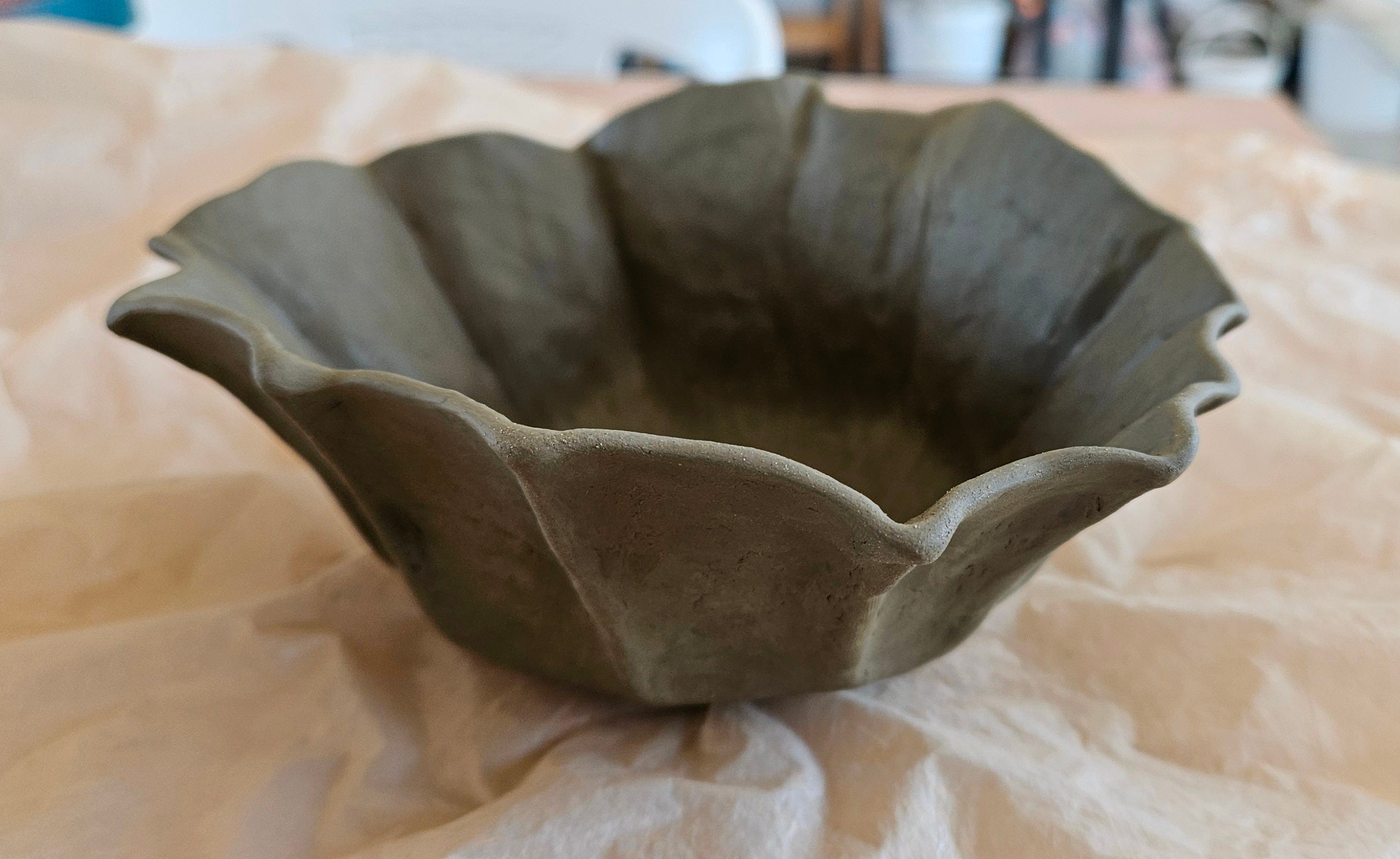
My pottery teacher in Greece stared at the conch shell piece I’d just made.
‘I can tell you’re used to working with clay,’ she said. ‘You know exactly where the edges are and how far you can take it.’
I hadn’t made a pinch pot since school. Hadn’t hand built something this tricky for over 10 years.
But my hands remembered what seven years away couldn’t erase.
As a third-generation potter, even when I walked away, the clay didn’t forget me.
And that’s what 2025 was. The year I came back to the pottery wheel and breathed a sigh of relief.
My grandfather studied ceramics in Stoke-on-Trent in the 1950s, then brought those skills back to the ceramics factory he ran in Bangladesh. Dad followed him into the business as ceramics manager.
But by the time I came along, he’d walked away from it. Restaurant and retail work paid the bills, but I could see the regret in his face when we talked about it.
I started pottery in my late 20s partly because I knew he’d like one of us to keep the tradition going. I’m the only one in the family still doing it.
I tried to get him back into it once. He refused. ‘Part of a past life,’ he said.
Like so many of his generation, once they walked away from something, they never went back.
I’m determined not to do that.
So returning to clay after years away was significant on many levels.
Reconnection to myself, my dad, my creative grief processing, and rebuilding something new for the future.
What kept me away from clay and creative recovery?
Getting back to pottery wasn’t simple.
Pain and fatigue have been constant companions for as long as I can remember. Nerve damage, a steroid injection that went wrong, joint conditions that make physical work brutal, and emotional tension often unbearable.
I’ve spent years expecting my body to keep up with everyone else. Getting frustrated when it couldn’t. Pushing too hard then crashing even harder over and over.
I know it doesn’t make sense but do it anyway.
At the start of 2025, after a convoluted journey to a specialist consultant, I left with a diagnosis: hypermobile EDS (Ehlers-Danlos Syndrome).
It clicked everything into place. The hitting a wall suddenly after feeling OK. Hours of stiffness after any physical work or just sitting on the sofa.
The foot pain that appears for no reason and lasts for days. Stomach issues that wreck the end of a lovely meal. Decades of random symptoms suddenly made sense.
But after the initial aha, I had weeks of grief and conflicting emotions.
Sadness at how I didn’t know and wasn’t self-compassionate with the body I had. Relief that it wasn’t all ‘in my head’ and just being unable to cope with work and life stress.
Realisation of an understudied and varying condition that makes it hard to get answers to every question.
Recognition that I now needed to listen to my body more keenly and work with its wisdom, not against it.
And after days of pain every time I’d tried to return to the wheel previously, I was deflated. I’d tried in February, but it was too much.
Grief again that I might never return to a hobby with such deep familial roots and endless possibilities.
But if 2025 taught me anything, it’s adaptation. Not taking no as the first answer. Replying with ‘how about this, instead?’
In June, I went to the Aberystwyth International Ceramics Art Festival with my pottery buddies. We’ve done this for years. Watching others work with clay, hearing them talk about their practice and experimenting with new techniques. Something lit up in me.
I had all this creative energy and nowhere to put it.
ChatGPT helped me find Sophie’s studio nearby. I visited the next day and signed up for summer classes that week.
To try again. See how my body reacted. Ease back in.
I felt a sense of pride. Dad would be happy I’d committed to getting back to it.
After he died 4 years ago, I’d lost the person I learned from. The one who could pick up a piece and know instantly what to improve or what had gone wrong.
God, I miss his subtle but kind criticism. It was the only time it came out from him, but I so respected it.
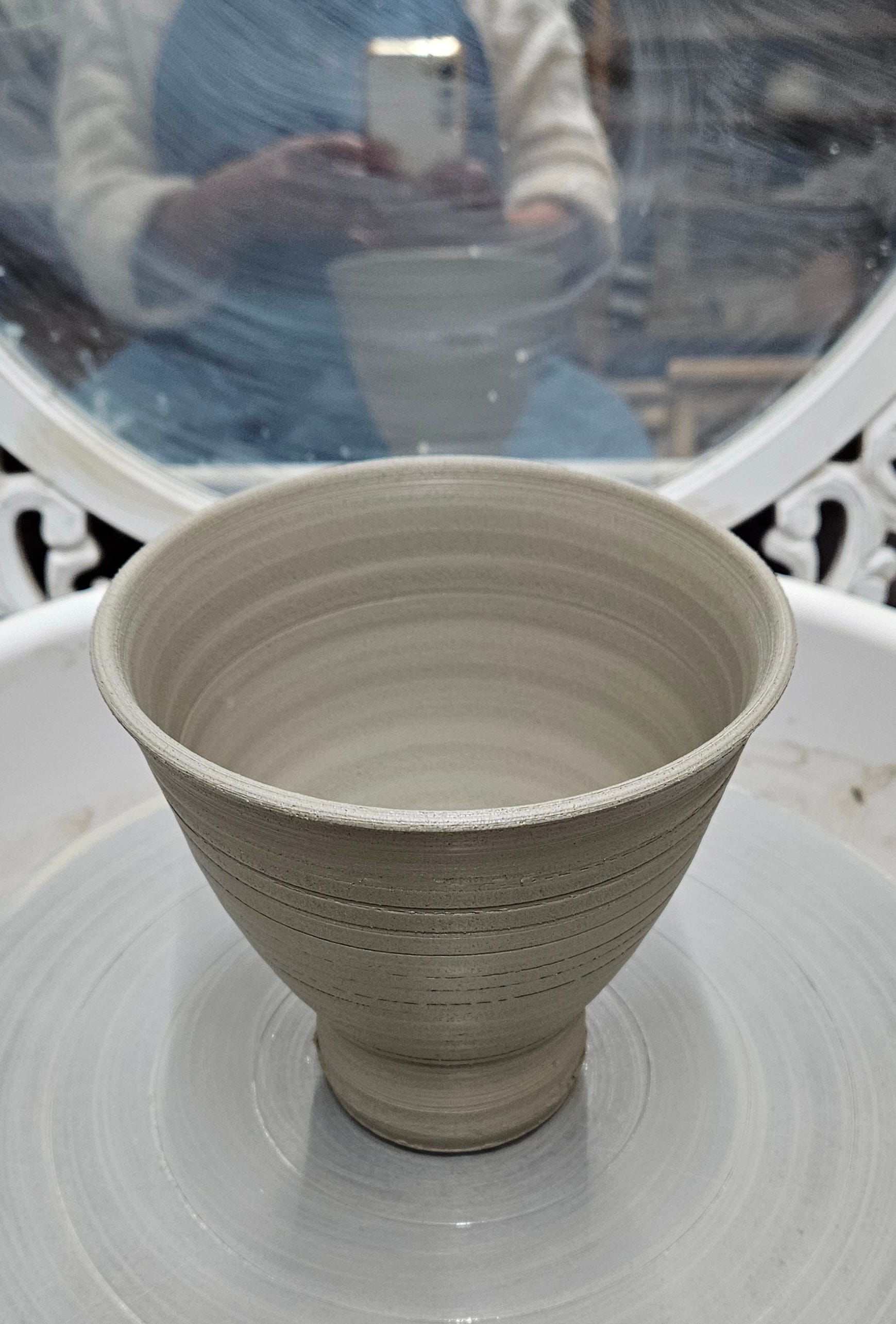
Creativity is a balm to a broken soul
But as often happens in life, just as one thing starts working, another falls apart.
Weeks after joining the studio, my entire team was made redundant. Including me.
I went from back-to-back meetings and legal contract reviews to persistent silence in my kitchen.
There’s something about redundancy, whether you know it’s coming or not, that knocks the wind out of your lungs.
It’s a holistic rejection.
Your role identity. Your sense of usefulness. Your dedication to being part of something bigger. Your professional values. Your self-esteem as a leader. Your sense of being a team protector.
You.
Even though I was relieved on one hand, as frankly, I was miserable and exhausted, I felt like a failure. That I’d let my team down. That I wasn’t good enough, either technically or at the office politics game.
And when you’re a sensitive over-giver, you feel rejected even from things you didn’t want to be part of, but accepted for bills to pay, for the chance to implement something new, or to achieve something challenging.
Once I knew the team were OK, I made a decision.
Stop. Step back. Be the total opposite of the last three years.
Lean into creativity. Lean into slowing down. Lean into building something different.
When life foundations collapse out of your control, you’ve got no choice but to sit in the rubble for a while and work out how to rebuild.
So I looked at the rubble of my life choices, with my aching body and tired soul, and realised the future had to be different.
To honour my dad and my needs, I dove back into clay.
With space to breathe and a different perspective, my body held up better during the summer classes. Sure, I still ached for days after sitting at the wheel on a Saturday morning.
But it was less intense, and boy, was it worth it.
Just being with the creative process. Reconnecting to my clay conversations with dad, missing him terribly but knowing he’d be happy I’d found my way back.
Realising that avoiding hard feelings doesn’t make the pain go away. It just stores it for later. And getting distracted by what I thought mattered but ultimately didn’t.
A solid lesson learned and felt.
Bruised, aching, confused, and fed up. Yes.
But also quiet, patient, and leaning into my intuition more. Better.
And as I eased back into my creative groove, loss returned to my life in a way I wasn’t expecting.
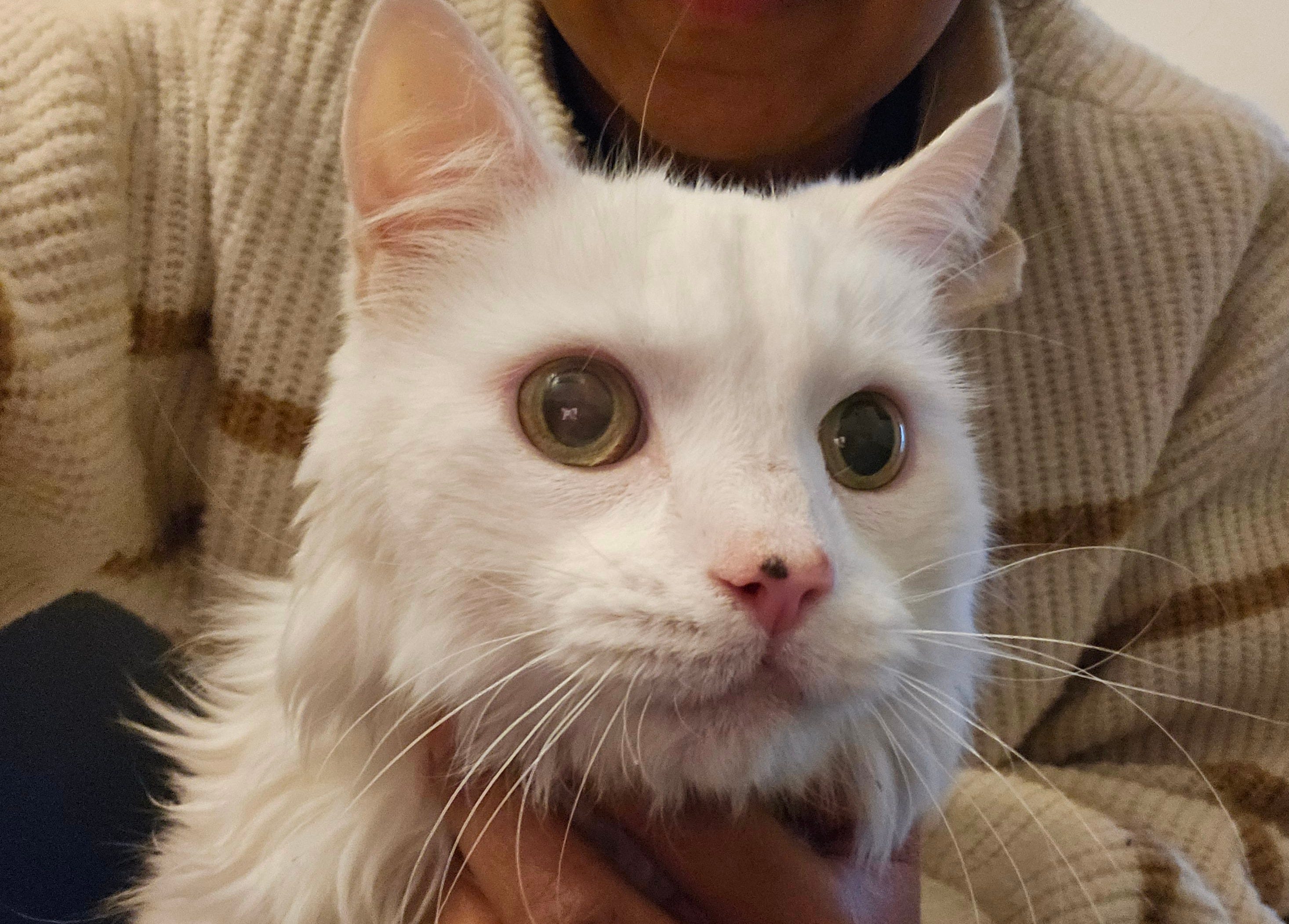
Our beloved cat Poppy, a white rescue medium haired moggy we’d had for years, quickly became sick and was diagnosed with heart failure.
I couldn’t believe it. Another loss tied to dad, as we’d gotten her from the RSPCA to give my parents company and a buddy for their wild black cat, Billie.
Poppy used to greet my dad in the middle of the night when he got back from midnight prayers. A watcher for the family. And I took her on some years ago when mum went overseas for a few months.
Quiet, assured, calm and curious. She was a constant until her body failed.
I found the sudden shift in her health jarring. And again, it felt like life was punishing me for finding some positive traction. Like when dad died during COVID after feeling like our family had managed it as well as we could have.
A quick, sharp reality slap to the face.
Poppy’s health declined fast, poor thing. Mum came to see her when she was thin and zonked out on meds. Geez, the fear and anxiety around anticipatory grief is a different beast altogether.
Like an alarm waiting to go off but you have no idea when it has been set for.
Constantly on alert, waiting to kick into action to handle something awful.
She fought hard on the meds, seemed to settle, but by the end of November, her demise was swift when that alarm rang.
I was with her at the end. Watched her slip away and her heart beat one last time. In the same room at the vet’s hospital where I’d said goodbye to my black cat Leela a couple of years ago.
A few days before my dad’s fourth deathiversary, compounding the sadness and grief that was already percolating and sitting heavy in the air.
My body reacted in a similar way. Guilty thoughts that I hadn’t done enough, soon enough. Physical shutdown wanting to pass out at every opportunity.
The pain and sadness washed over me like a cold shroud from a wintry painting.
Returning to the studio in the weeks that followed helped me do something with the pain. Channel it into something practical and physical.
That’s what creativity gives us. An outlet for the difficult stuff that sits heavy in the body and soul.
Deconstruction allows us to build something new
When you’ve been splattered by life, it’s hard to see where your skills and talents actually sit.
But this year, I had the right conversations at the right time.
Or maybe I’d finally had enough quiet to listen. Definitely this.
I’d felt off in my business for a while. I was coaching people through burnout, something I’d lived through many times over the years.
But after dad died, grief shaped everything. My sleep. My body. How I showed up in the world.
I found it harder to coach burnout without talking about loss. I’ve explored research on how loss types influence burnout patterns. They’re inseparable.
And I couldn’t ignore what had shaped my life for the past four years anymore.
Those conversations helped me realise I wanted to, needed to, lean into grief awareness and moving forward after loss.
To build self-compassion in our darkest times. To use creative coaching to unblock our pain.
I pivoted this Substack and lost people along the way. But I’ve connected with others in ways I never could have imagined.
I’m building my grief and resilience coaching business differently now aligned with my revived values, my energy, the legacy I want to build.
Not chasing viral content when I want to be quiet in the studio. Not convincing people they need to change their entire worldview.
Just meeting people where they are. Resonating where it makes sense.
So even though this year has been littered with endings, it’s been sprinkled with new beginnings.
Returning to travel after being scared to leave home.
Connecting to amazing, interesting, and loving people.
Exploring creative collaborations with local art galleries.
In September, I went to Greece for a ceramics workshop. Pinch pots I’d never made before. Techniques I’d never tried.
But my hands remembered. The intuition built over years with clay was still there.
Phew.
Another unexpected joy of deconstruction and doing something new while trusting what I already knew.
I’m still figuring out my next ceramics project. But I’m keen to cross over clay creativity with my grief work somehow.
A project is brewing. Quietly solidifying.
‘Grief vases’ popped into my head yesterday. Not in a macabre way, no. Instead, exploring how to express grief and loss in ways we don’t expect.
In everyday items we use without thinking. A cup. A mug. A plate. A dish. A vase full of dying flowers.
And looking back at an up and down year, I’ve survived what could have crushed me. But it didn’t.
Instead, it gave me time to breathe and accept what a fallible yet resilient human I am.
Final thoughts
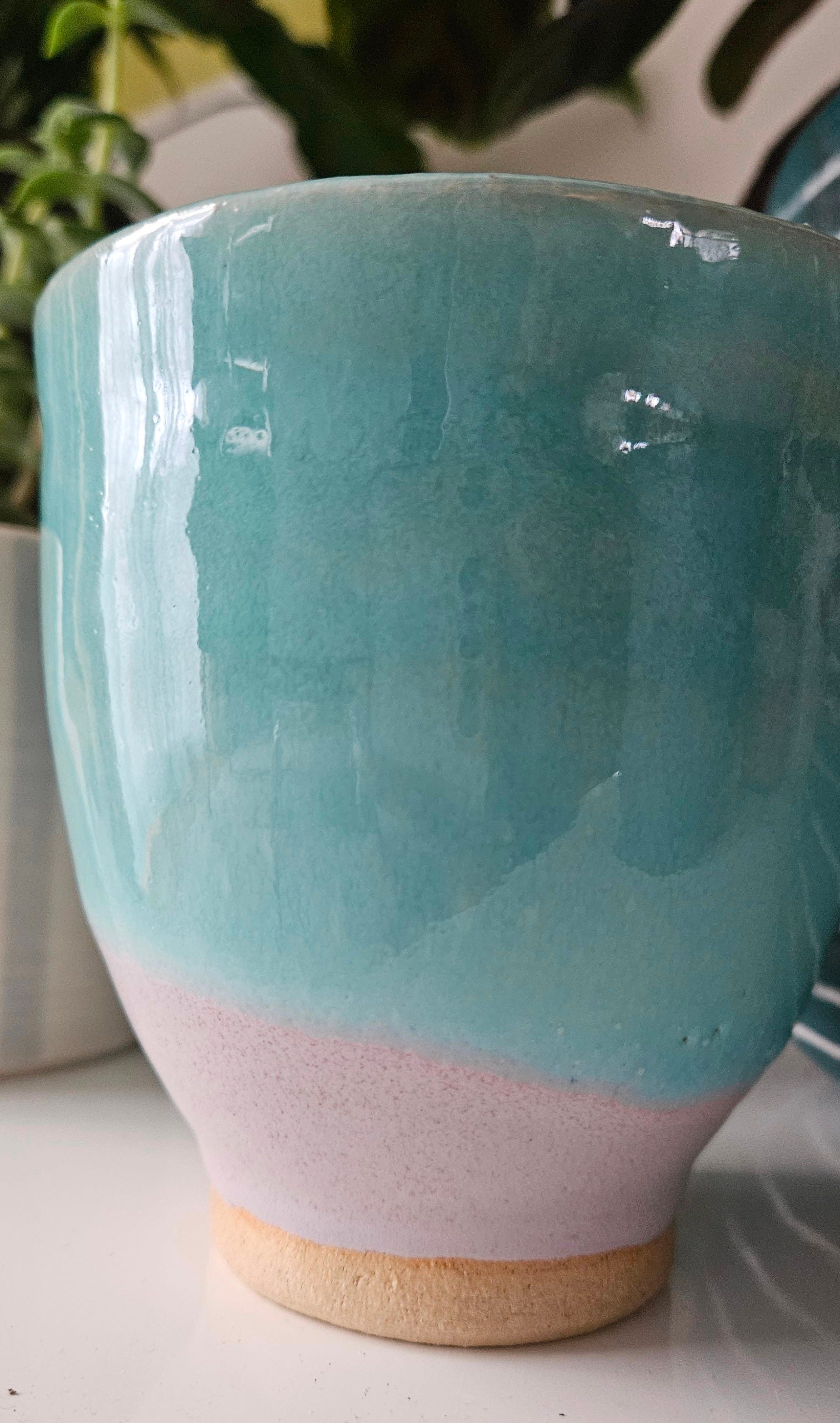
I’m back at the wheel now. Hands in clay. Experimenting with glaze. Dad would be proud.
And time away from what we love doesn’t mean we can’t return.
Just like clay, I’ve been malleable, delicate, flexible but hardened through fire.
And it’s not always the final form but evolves in the space it’s placed within.
Once we’re long gone, what we’ve created persists and that’s truly a beautiful, healing thing.
P.S. Thanks for being here. I appreciate it more than you’ll realise.
What are you thinking about returning to in 2026? I’d love to hear about it in the comments.
Beautiful x